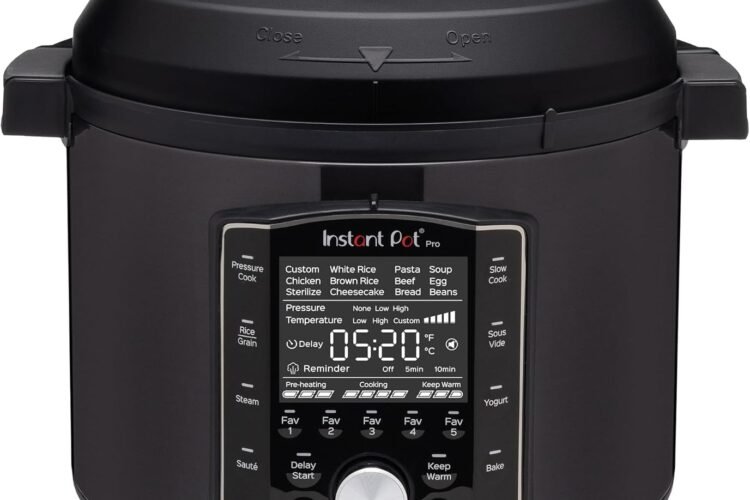
Cooking at home often involves more than simply preparing a meal. There may be rice to cook, vegetables to steam, meat to tenderize, soup to simmer, leftovers to warm, or a slow-cooked dish that needs several hours to develop its texture and flavor. Having separate appliances for each task can take up valuable counter space and make meal preparation more complicated.
The Instant Pot Pro 8 QT 10-in-1 Pressure Cooker is designed around the idea of combining several common cooking functions in one countertop appliance. Rather than being limited to pressure cooking, the appliance includes settings for slow cooking, rice and grain preparation, steaming, sautéing, sous vide cooking, yogurt making, sterilizing, and keeping food warm.
The 8-quart capacity also gives it a larger cooking space than many compact multi-cookers, making it particularly relevant for households that regularly prepare family-sized meals or prefer to cook several portions at once.
This guide takes a closer look at how the Instant Pot Pro 8 QT fits into everyday cooking, what its different functions are intended for, and what you should consider before deciding whether a multi-function pressure cooker is appropriate for your kitchen.
What Is the Instant Pot Pro 8 QT?
The Instant Pot Pro 8 QT is an electric multi-cooker designed to combine several cooking methods in one appliance. Its main function is pressure cooking, but it also provides several other modes that can be used independently.
The appliance is rated as a 10-in-1 cooker and includes functions associated with:
- Pressure cooking
- Slow cooking
- Rice and grain cooking
- Steaming
- Sautéing
- Sous vide cooking
- Yogurt preparation
- Sterilizing
- Keeping food warm
- Other programmable cooking functions integrated into the multi-cooker system
Instead of purchasing individual appliances for each of these tasks, users can access multiple cooking methods from a single countertop unit.
That does not mean every cooking technique will produce exactly the same results as a dedicated appliance. Rather, the appeal of a multi-cooker is convenience and flexibility. It provides different cooking options while keeping the kitchen setup relatively simple.
The Pro model also works with the Instant Pot recipe ecosystem, including access to an app containing a large collection of recipes.
Key Features of the Instant Pot Pro 8 QT
1. 8-Quart Cooking Capacity
Capacity is one of the first specifications worth considering.
An 8-quart cooker provides considerably more room than smaller multi-cookers. The additional capacity can be useful when preparing soups, stews, beans, rice, poultry, or other dishes intended to produce multiple servings.
For someone cooking primarily for one person, an 8-quart appliance may occupy more counter and storage space than necessary. For families or people who prefer cooking in batches, however, the larger capacity can be more practical.
It is also important to remember that pressure cookers should not simply be filled to the very top. Different foods and cooking methods have different maximum-fill recommendations, particularly foods that expand during cooking.
Following the manufacturer’s instructions for maximum fill levels is therefore an important part of using the appliance correctly.
2. Pressure Cooking
Pressure cooking is one of the primary reasons people choose an electric multi-cooker.
A sealed cooking environment allows pressure to build inside the pot. The increased pressure raises the boiling point of water, allowing food to cook at temperatures above the normal boiling point.
This can be particularly useful for foods that traditionally require long cooking times.
Beans, tougher cuts of meat, stews, broths, and certain grains are examples of foods that can be prepared using pressure cooking.
The practical advantage is not simply speed. Pressure cooking can also make it easier to prepare dishes that normally require substantial monitoring on the stovetop.
However, pressure cooking requires understanding the difference between natural pressure release and quick pressure release. The appropriate method depends on the recipe and the food being prepared.
3. Slow Cooking
The slow-cooking function provides a completely different approach.
Instead of using high-temperature pressure cooking, slow cooking is designed for recipes that benefit from longer cooking periods at lower temperatures.
Examples include:
- Stews
- Soups
- Pulled meats
- Beans
- Braised dishes
- Some sauces
- Comfort-food recipes
Slow cooking can be useful when you want to prepare ingredients in advance and allow them to cook gradually.
One advantage of having both pressure cooking and slow cooking in the same appliance is flexibility. A recipe that is traditionally prepared slowly does not necessarily have to be converted to pressure cooking, while dishes that benefit from pressure cooking can use that method instead.
4. Rice and Grain Cooking
Rice and grains can sometimes be surprisingly difficult to prepare consistently using a conventional saucepan.
Water ratios, heat levels, cooking time, and resting periods can all affect the final texture.
The Instant Pot Pro includes a rice and grain cooking function intended to simplify this process.
Depending on the recipe, users can prepare different types of rice and grains as part of a larger meal. This can be particularly useful for meal preparation because a larger batch can be prepared and stored for later meals.
As always, the correct liquid ratio and program can depend on the specific grain, so following the appropriate recipe or manufacturer’s instructions is preferable to assuming that one ratio works for everything.
5. Sauté Function
The sauté function is particularly useful because it can reduce the number of cooking vessels needed.
For example, a recipe might begin by sautéing onions and garlic, browning meat, or cooking vegetables before another cooking method is started.
With a sauté-capable multi-cooker, these steps can take place directly in the cooking pot.
A typical meal might therefore involve:
- Sautéing aromatics.
- Browning meat or vegetables.
- Adding liquid and remaining ingredients.
- Switching to pressure cooking or another appropriate program.
This approach can make recipes more streamlined and can reduce the number of pans that need to be washed afterward.
6. Steaming
Steaming is another practical cooking method available through the appliance.
Vegetables, seafood, eggs, and other foods can be prepared using steam rather than direct contact with cooking oil or water.
Steaming can be useful when you want to preserve the texture of delicate ingredients or prepare a side dish while another part of the meal is being handled separately.
The actual cooking time varies considerably depending on the food, its size, and the desired texture.
7. Sous Vide
Sous vide cooking uses controlled water temperature to cook food gradually.
The food is generally sealed in a suitable bag and immersed in a temperature-controlled water bath. Rather than relying on a high cooking temperature for a short period, sous vide focuses on maintaining a specific water temperature over a longer period.
This technique is often associated with precise cooking of foods such as steak, poultry, fish, eggs, and some vegetables.
The sous vide function adds another cooking style to the appliance without requiring a separate dedicated sous vide device.
Anyone using sous vide should pay attention to food-safety guidance, appropriate temperatures, cooking times, and the suitability of bags or containers for the intended use.
8. Yogurt Making
The yogurt function is designed for people interested in preparing yogurt at home.
Homemade yogurt generally involves heating milk, allowing it to cool to an appropriate temperature, adding a starter culture, and maintaining suitable conditions for fermentation.
The appliance can help manage the controlled environment needed during the process.
This feature may be particularly interesting for households that regularly consume yogurt or enjoy experimenting with homemade versions.
The final consistency and flavor can vary depending on the milk, starter culture, fermentation period, and preparation method.
9. Sterilizing Function
The sterilizing function is another feature that extends the appliance beyond everyday pressure cooking.
Sterilization can have several household applications, although the appropriate use depends on the item being sterilized and the manufacturer’s instructions.
It is important not to assume that a household multi-cooker can replace specialized sterilization equipment in situations where validated sterilization procedures are required.
For ordinary household applications, users should follow the manufacturer’s guidance carefully and ensure that the objects being processed are appropriate for the method.
10. Keep-Warm Function
The warming function can be useful when meals are prepared before everyone is ready to eat.
For example, a large batch of soup, chili, stew, or another suitable dish can remain warm for a period after cooking.
This can be convenient for family meals where everyone does not necessarily eat at exactly the same time.
Food should still be handled according to appropriate food-safety practices, and the warming function should not be treated as a substitute for proper refrigeration or long-term food storage.
How the Instant Pot Pro Can Be Used in Everyday Cooking
One of the most interesting aspects of a multi-cooker is that its usefulness is not limited to one particular type of cuisine.
Soups and Stews
The combination of sautéing and pressure cooking works well for recipes that begin with aromatic vegetables.
You can sauté ingredients such as onions, carrots, garlic, or celery before adding broth and other ingredients. The cooking process can then continue using an appropriate pressure-cooking program.
For dishes such as beef stew, the ability to brown meat before adding liquid can also be useful.
Beans and Legumes
Dried beans can require significant preparation time when cooked conventionally.
Pressure cooking provides a convenient method for preparing many types of legumes, although soaking requirements, liquid quantities, cooking times, and pressure-release methods differ between varieties.
Beans can then be used for soups, chili, salads, side dishes, and meal-preparation recipes.
Rice Bowls
Rice can serve as the foundation of many quick meals.
A batch of rice can be combined with vegetables, beans, chicken, fish, tofu, or other ingredients to create flexible meals throughout the week.
Using a dedicated rice or grain program can make this type of meal preparation more straightforward.
Family-Size Meals
The 8-quart capacity is particularly relevant when cooking larger quantities.
A family-sized soup, chili, stew, or batch of beans can be prepared in one cooking session rather than divided among several smaller pots.
This can also be useful for people who like preparing food ahead of time.
Meal Preparation
Meal preparation does not necessarily require complicated recipes.
A multi-cooker can be used to prepare several basic components that can later be combined into different meals.
For example, you might prepare:
- A batch of rice
- Cooked beans
- Steamed vegetables
- Shredded chicken
- A soup or stew
These ingredients can then become lunches or dinners over several days, provided they are cooled, stored, and reheated safely.
Using the Instant Pot for Different Cooking Styles
A useful way to think about a multi-cooker is not as a replacement for every appliance in the kitchen, but as a flexible cooking station.
Traditional Comfort Food
Pressure cooking and slow cooking can both be useful for traditional comfort-food recipes.
Recipes involving tougher cuts of meat, beans, root vegetables, and hearty broths are natural candidates for these cooking methods.
Health-Conscious Cooking
Steaming can provide an alternative to frying for certain foods.
Similarly, pressure cooking can be used to prepare vegetables, grains, beans, and other ingredients without requiring large amounts of added cooking fat.
Of course, the health characteristics of a finished meal depend primarily on the ingredients and overall recipe rather than the appliance itself.
International Recipes
A multi-cooker can also be used across different cuisines.
It can be useful for preparing dishes involving rice, lentils, beans, curries, soups, stews, grains, and slow-cooked meats.
The appliance does not dictate a particular cuisine, which makes it adaptable to different cooking traditions.
The Role of the Recipe App
The Instant Pot Pro is associated with an app containing access to more than 800 recipes.
For people who are new to multi-cooker cooking, a recipe library can be helpful because cooking with pressure is different from cooking in an uncovered saucepan.
Recipes can provide guidance about:
- Ingredient quantities
- Cooking times
- Pressure levels
- Liquid requirements
- Pressure-release methods
- Cooking sequences
- Serving ideas
This can be especially useful during the learning phase.
Rather than simply converting every favorite stovetop recipe directly into a pressure-cooker recipe, it is generally better to start with recipes designed for the appliance or recipes from reliable sources that provide specific instructions.
Who May Find an 8-Quart Multi-Cooker Useful?
The Instant Pot Pro 8 QT may be worth considering for several types of households.
Families
The larger capacity can be useful for preparing family-sized meals.
Families that frequently make soups, rice, beans, stews, or other batch-friendly dishes may appreciate having a larger cooking vessel.
People Who Meal Prep
People who prepare food for several days may find the capacity useful.
Instead of preparing small portions repeatedly, larger batches can be cooked and divided into appropriate containers.
Busy Home Cooks
A multi-cooker can simplify recipes involving several cooking stages.
For example, sautéing and pressure cooking can be completed in the same pot rather than transferring ingredients between different pans.
People With Limited Kitchen Equipment
If counter space or storage space is limited, combining multiple cooking functions into one appliance can be appealing.
The important point is that a multi-cooker can reduce the need for several specialized appliances, although it still requires its own storage and counter space.
People Interested in Different Cooking Techniques
The variety of functions makes the appliance relevant to people who enjoy experimenting with different methods.
Someone interested in pressure cooking, slow cooking, steaming, yogurt making, or sous vide can explore several techniques without purchasing a separate appliance for every method.
Important Things to Consider Before Choosing an 8-Quart Model
A larger multi-cooker is not automatically the right choice for every kitchen.
Counter Space
An 8-quart appliance has a substantial physical footprint.
Before choosing it, consider where it will be placed during cooking and where it will be stored afterward.
Pressure cooking also involves steam release, so the appliance should be positioned according to the manufacturer’s safety and ventilation recommendations.
Cooking for One or Two People
For a single person or a couple, an 8-quart cooker may provide more capacity than necessary.
That extra capacity can be useful for batch cooking, but it can also mean a larger appliance occupying valuable kitchen space.
Learning Curve
Although electric multi-cookers are designed to simplify cooking, pressure cooking still has a learning curve.
Users need to understand the controls, pressure release, liquid requirements, maximum fill levels, and appropriate cooking times.
Once these concepts become familiar, the appliance can become easier to incorporate into regular meal preparation.
Not Every Recipe Needs Pressure Cooking
One common misconception is that a pressure cooker should be used for everything.
Some foods are better suited to steaming, sautéing, slow cooking, or conventional cooking.
For example, delicate foods may require more careful handling than hearty stews.
The value of having multiple functions is precisely that you can select the method appropriate for the recipe.
Cleaning and Maintenance
Any appliance that handles food needs regular cleaning.
The cooking pot, sealing components, lid, and other removable parts should be cleaned according to the manufacturer’s instructions.
The sealing ring deserves particular attention because food odors can remain after cooking strongly flavored dishes.
Regular inspection of seals and other components is also sensible, particularly for an appliance that operates under pressure.
Instant Pot Pro 8 QT vs. General Multi-Cooker Categories
Different types of kitchen appliances solve different problems, so comparing categories can be more useful than simply comparing brands.
| Appliance Category | Main Purpose | Typical Strength |
|---|---|---|
| Electric pressure cooker | Pressure cooking and multi-function cooking | Faster preparation of many traditionally long-cooking dishes |
| Slow cooker | Long, low-temperature cooking | Convenient slow-cooked meals |
| Rice cooker | Rice and grain preparation | Consistent rice-focused cooking |
| Dedicated sous vide cooker | Temperature-controlled water cooking | Specialized sous vide control |
| Steamer | Steam-based cooking | Vegetables, seafood, and delicate foods |
| Multi-cooker | Several cooking methods | Flexibility and reduced appliance count |
A dedicated appliance can sometimes provide more specialized controls for a particular cooking method.
The advantage of a multi-cooker is different: it combines multiple functions in one system.
For someone who regularly uses several cooking methods, that flexibility may be more useful than having several specialized appliances.
Practical Tips for Getting Started
If you are new to pressure cooking, begin with straightforward recipes rather than immediately attempting complicated meals.
Rice, beans, simple soups, and basic stews can help you become familiar with the appliance.
Read the Instructions
Before using pressure cooking, read the manufacturer’s instructions carefully.
Pay particular attention to:
- Maximum fill levels
- Pressure-release procedures
- Cleaning instructions
- Steam handling
- Sealing components
- Recommended cooking liquids
Keep a Recipe Reference
During your first few meals, it can be useful to keep the recipe available while cooking.
This helps you follow the correct sequence and understand when the appliance should be switched between functions.
Allow for Natural Pressure Release When Appropriate
Some recipes benefit from a natural release rather than an immediate release.
The correct method depends on the ingredients and recipe, so pressure-release instructions should not be treated as interchangeable.
Don’t Overfill
Foods such as beans, grains, and certain expanding ingredients require particular care.
Always follow the manufacturer’s recommended fill limits for pressure cooking.
Experiment Gradually
Once you understand the basic functions, you can begin adapting recipes and experimenting with cooking times.
Keeping notes about what worked can make it easier to reproduce successful recipes later.
Frequently Asked Questions
Is the Instant Pot Pro 8 QT only a pressure cooker?
No. It is designed as a multi-function appliance with several cooking modes, including pressure cooking, slow cooking, rice and grain cooking, steaming, sautéing, sous vide, yogurt preparation, sterilizing, and warming.
What does the 8 QT capacity mean?
The 8-quart designation refers to the overall capacity of the cooking vessel. The entire capacity should not necessarily be used for every recipe. Pressure-cooking fill limits and ingredient-specific requirements still apply.
Can it cook rice?
Yes. Rice and grain cooking is one of the functions included with the appliance. The appropriate water ratio and cooking settings depend on the type of rice or grain being prepared.
Can it be used as a slow cooker?
Yes. Slow cooking is one of its available functions, allowing recipes to be prepared using a slower, lower-temperature cooking approach rather than pressure cooking.
Can you sauté food in it?
Yes. The sauté function allows ingredients such as vegetables and meat to be browned or cooked before another cooking program is selected.
Does it make yogurt?
Yes. Yogurt preparation is included among its cooking functions. Homemade yogurt requires appropriate ingredients, temperatures, fermentation time, and hygiene practices.
Can it steam vegetables?
Yes. The appliance can be used for steaming suitable foods, including vegetables. Cooking time depends on the food, size, and desired texture.
Can it be used for sous vide cooking?
Yes. Sous vide is one of the functions included in the multi-cooker. Proper temperature control, suitable food packaging, and food-safety practices remain important.
Is an 8-quart model suitable for a small household?
It can be, particularly if the household regularly meal preps or cooks larger batches. However, people cooking small portions may prefer a smaller appliance because an 8-quart model requires more storage and counter space.
Is pressure cooking safe?
Modern electric pressure cookers are designed with safety mechanisms, but users still need to follow the manufacturer’s instructions. Proper sealing, appropriate liquid levels, maximum fill limits, and safe pressure-release procedures are important.
Can the appliance replace every kitchen appliance?
Not necessarily. It combines many functions, but dedicated appliances can still offer specialized features that a multi-cooker does not. Its main advantage is having several cooking methods available in one appliance.
Does the Instant Pot Pro include recipes?
The product is associated with access to an app containing more than 800 recipes. Recipe availability and app functionality can change over time, so users should check the current information provided by the manufacturer.
What kinds of meals can be prepared in it?
The possibilities include soups, stews, beans, rice dishes, steamed vegetables, slow-cooked meals, yogurt, and many other recipes adapted to its available cooking functions.
Final Thoughts
The Instant Pot Pro 8 QT 10-in-1 Pressure Cooker is designed for people who want several cooking methods in one countertop appliance.
Its combination of pressure cooking, slow cooking, rice and grain preparation, steaming, sautéing, sous vide, yogurt making, sterilizing, and warming gives it a broad range of possible uses.
The 8-quart capacity is particularly relevant for families, batch cooking, and meal preparation, while the multiple cooking modes can reduce the need for separate appliances.
At the same time, choosing a larger multi-cooker should involve practical considerations such as kitchen space, household size, cooking habits, cleaning requirements, and familiarity with pressure cooking.
The best way to evaluate whether it fits your kitchen is to consider the functions you would genuinely use. If you regularly prepare soups, beans, rice, stews, steamed foods, slow-cooked meals, or batch recipes, having several of these methods available in one appliance may simplify your cooking routine.
For people who are new to pressure cooking, the included recipe ecosystem can also provide a starting point for learning how different ingredients respond to pressure, temperature, and cooking time.