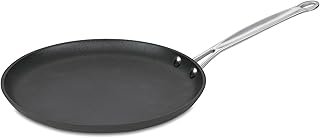
A crepe pan is a shallow, low-sided pan designed specifically for making crepes and other thin pancakes. Its distinctive design — flat base, very low sides, and often a nonstick surface — solves the specific challenges of cooking thin batters that need to spread quickly and flip cleanly.
What Makes a Crepe Pan Different
A crepe pan has sides that are much lower than a standard frying pan (typically 0.5-1 inch rather than 2-3 inches). This low profile serves two purposes: it allows you to slide a thin spatula under the crepe without hitting a side wall, and it allows the long, sweeping pour-and-spread motion needed to coat the entire base with batter before it sets. A standard frying pan can work in a pinch, but the higher sides make the spreading motion significantly more awkward.
Materials
Carbon Steel
Traditional French crepe pans are carbon steel. Carbon steel heats quickly and evenly, develops a natural nonstick patina with seasoning over time, and allows you to cook at high heat — which produces crepes with lightly browned, slightly crispy edges. Carbon steel requires seasoning and careful maintenance (no extended soaking, no dishwasher) but is durable for decades.
Nonstick-Coated Aluminum
Nonstick aluminum crepe pans are the most practical choice for home cooks. They require less butter or oil, are easier to clean, and produce consistent release without seasoning. Cuisinart and similar brands make quality nonstick crepe pans that perform reliably for everyday use.
Cast Iron
Flat cast iron griddles work well for crepes but are very heavy (making the swirling motion more difficult) and take a long time to heat evenly. Better suited to savory applications like socca or flatbreads than delicate sweet crepes.
Pan Diameter
Crepe pans range from 8 to 12 inches in diameter. A 10-11 inch pan produces a standard restaurant-sized crepe. Smaller pans (8 inch) produce smaller, thicker crepes with less spread. For most home use, a 10-inch pan is the most practical size.
Spreading the Batter
Two main methods for spreading crepe batter exist: the pan tilt-and-swirl method (lift the pan and rotate it quickly as you pour, spreading the batter in a thin circle) and the spreader method (pour batter into the center of a flat pan and use a T-shaped wooden spreader to distribute it in a circular motion). The tilt-and-swirl method requires no additional tool; the spreader method requires practice but produces very thin, uniform crepes.
Heat Management
Crepes require medium to medium-high heat. Too hot and the edges burn before the center sets; too cool and the crepe is thick, pale, and rubbery. Preheating the pan for 2-3 minutes before beginning is important. A butter or oil test (it should sizzle gently) helps confirm the right temperature.
What to Look For
For most home cooks, a 10-inch nonstick-coated aluminum crepe pan from a reputable cookware brand is the best choice. It is forgiving, easy to clean, and produces consistent results. If you are serious about traditional French crepes and willing to maintain a carbon steel pan, that is the authentic choice that professional crepe makers use.
Summary
A crepe pan is a specialized tool that genuinely improves crepe-making compared to a standard frying pan. The low sides, flat base, and right material all contribute to easier spreading and cleaner flipping. For most home cooks, a quality nonstick model is the practical starting point.
You can check more details and current options on Amazon here.