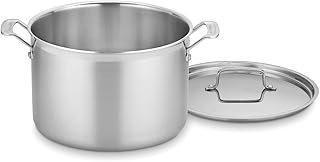
A stock pot is the largest pot in most home kitchens, designed for making stocks, soups, large batches of pasta, and canning. Its tall sides and large volume serve specific purposes that smaller pots cannot fulfill.
What a Stock Pot Is Designed For
The tall, straight sides of a stock pot minimize evaporation during long simmering, which is important when making stocks that cook for 4-8 hours. The large volume accommodates a whole chicken carcass, large bones, or significant quantities of vegetables. It is also used for boiling large quantities of pasta, blanching vegetables in large batches, and water bath canning.
Materials
Stainless Steel
Stainless steel stock pots are the standard for home and professional use. They are durable, easy to clean, do not react with acidic ingredients, and are appropriate for all cooktops including induction. A disk-bottom (thick aluminum disk welded to the base) distributes heat evenly from the bottom. Full-clad construction for a large stock pot is rare and expensive — a quality disk-bottom model performs very well for stock making.
Aluminum
Aluminum stock pots are lighter and less expensive than stainless. Bare aluminum can react with acidic ingredients (tomato, wine) over long cooking times, which can affect flavor and discolor the pot. Anodized aluminum avoids this issue.
Enameled Steel
Lightweight and inexpensive. The enamel coating prevents reactivity with acidic ingredients. The steel base can develop hot spots. Practical for occasional use.
Size
Stock pots range from 6 quarts to 20+ quarts for home use. An 8-12 quart pot suits most household needs — it can hold a whole chicken with vegetables comfortably and cooks enough pasta for a large group. A 20-quart pot is more suited for canning or large batch cooking.
Lid
A tight-fitting lid is important for minimizing evaporation during long simmering. Most stock pots come with a matching stainless or glass lid. A glass lid allows you to monitor the simmer level without lifting the lid.
Handles and Maneuverability
A full stock pot can be very heavy — 8-12 quarts of liquid weighs 8-12 kg plus the weight of the pot. Loop handles on both sides are essential for safe lifting. Handles should be wide enough to grip securely with oven mitts. Riveted handles are more secure than welded ones under heavy loads.
Steamer Insert
Some stock pots come with a steamer basket or pasta insert — a perforated inset that sits inside the pot. You can cook pasta in the insert and lift the entire insert to drain rather than carrying a heavy pot of boiling water to the sink. This is a practical safety feature worth considering.
What to Look For
For most households, a 12-quart stainless steel disk-bottom stock pot from a reputable brand (Cuisinart, All-Clad, Tramontina) covers all practical needs. If you can, choose a model with a pasta insert — it adds genuine convenience for pasta cooking. Prioritize handle quality and lid fit.
Summary
A stock pot is a specialized large-volume pot that earns its place for stocks, soups, pasta, and batch cooking. Stainless steel, a practical size (8-12 quarts), sturdy handles, and a tight-fitting lid are the main considerations when choosing one.
You can check more details and current options on Amazon here.