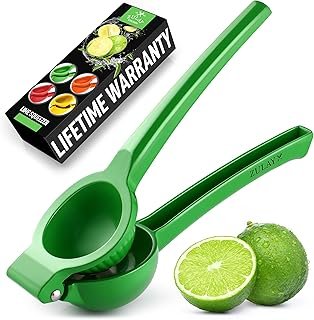
A citrus juicer is one of the simplest, most useful kitchen tools for anyone who cooks with lemon, lime, or orange juice regularly. Understanding the different types and what to look for helps you choose one that fits your actual usage.
Types of Citrus Juicers
Manual Press (Mexican Elbow/Hinged Press)
The most popular manual design — a hinged press that folds two cup-shaped halves together. The fruit half is placed cut-side down in the bottom cup, and squeezing the handles forces the juice through the holes while the dome shape pushes the fruit inside out, extracting more juice than other methods. Also catches seeds automatically. Available in aluminum and cast iron versions. The Zulay and OXO versions are particularly well-regarded for the amount of juice they extract.
Handheld Reamer
A conical ribbed tool pressed into the halved fruit and twisted to extract juice. Simple and inexpensive. Requires a separate bowl or strainer to catch seeds. Less leverage than a hinged press, which means you get less juice from the same amount of fruit.
Countertop Reamer/Dome Juicer
A stationary dome-shaped ridged cone mounted on a base with a strainer and cup. You press the halved fruit onto the dome and twist. Works well for large quantities but requires more counter space and cleanup than a handheld press.
Electric Citrus Juicer
An electric motor spins the dome while you press the fruit. Fast and efficient for large quantities. Usually includes multiple dome sizes for different citrus types. Best for households that juice significant quantities regularly.
Key Factors
Juice Yield
The hinged press design typically extracts more juice per piece of fruit than a reamer because it inverts the fruit skin during pressing. This is particularly noticeable with limes, which are harder to juice thoroughly with a reamer.
Seed Catching
Hinged press designs automatically catch seeds in the perforations. Reamers require a separate strainer unless you pick seeds out manually.
Material
Aluminum hinged presses are lightweight and affordable. Cast iron versions are heavier and more durable for high-volume use. Stainless steel models resist corrosion and maintain their appearance better over time.
Size
Most hinged presses come in multiple sizes: small for limes, medium for lemons, large for oranges and grapefruits. A medium size handles most kitchen uses (lemons and limes) adequately.
Cleaning
Most manual citrus juicers can be rinsed immediately after use. The hinged press design has no crevices where juice gets trapped. Most are dishwasher safe, though aluminum can discolor over time in the dishwasher.
What to Look For
For most home cooks, a medium-size cast aluminum or stainless steel hinged press juicer covers all practical citrus squeezing needs. It is fast, efficient, handles both lemons and limes, and cleans up quickly. For households that juice large quantities regularly, a countertop electric juicer adds convenience.
Summary
A citrus juicer is a simple tool with a meaningful impact on how efficiently you use fresh citrus. The hinged press design extracts more juice and catches seeds automatically, making it the most practical choice for most home kitchens.
You can check more details and current options on Amazon here.