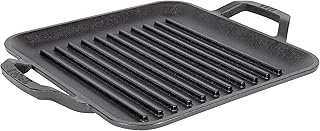
A grill pan is a ridged pan designed to simulate the seared surface and grill marks of outdoor grilling on a stovetop. It is a practical alternative for year-round indoor grilling of meats, fish, vegetables, and more.
How a Grill Pan Works
The raised ridges of a grill pan elevate the food above the pan surface, allowing fat to drain into the channels between the ridges. This does two things: it prevents the food from stewing in its own juices (which would prevent browning) and it creates the characteristic grill marks from direct contact with the hot ridges. Heat must be very high for effective searing — grill pans work best at temperatures above 200°C.
Materials
Cast Iron
Cast iron grill pans are the most popular and effective option. Cast iron retains heat exceptionally well — once it reaches temperature, it barely loses heat when cold food is placed on it. This sustained high heat is what produces a proper sear and grill marks. The Lodge cast iron square grill pan is one of the most widely used models. Cast iron requires seasoning and hand washing but lasts indefinitely.
Hard-Anodized Aluminum
Aluminum grill pans heat very quickly but do not retain heat as well as cast iron. When cold food is placed on them, the temperature drops more sharply, which can result in less effective searing. Better for light use with thin cuts of meat and vegetables.
Enameled Cast Iron
Enameled cast iron grill pans (such as those from Le Creuset) offer the heat retention of cast iron without the need for seasoning. The enamel coating is easy to clean. They are significantly more expensive than bare cast iron but require less maintenance.
Square vs. Round
Square grill pans offer more grilling surface and allow you to cook more food at once. A round grill pan matches the shape of a standard burner and heats more evenly over gas flames. For stovetop use, a square pan placed over two burners on a gas range provides maximum surface area.
Ridge Height and Spacing
Higher ridges produce more pronounced grill marks and elevate the food further from the fat. Wider spacing between ridges allows more fat to drain and reduces the risk of flare-ups. Both factors affect the final appearance and the amount of char and caramelization produced.
Heat and Ventilation
Grill pans produce smoke — particularly when cooking fatty proteins at high heat. Proper kitchen ventilation is important. A range hood or open windows help significantly.
Cleaning
The ridges of a cast iron grill pan trap food particles and grease. Clean while the pan is still warm with a stiff brush. A chain mail scrubber is particularly effective. Do not use soap on bare cast iron. Dry immediately and apply a thin coat of oil to prevent rust.
What to Look For
For most home cooks, a Lodge cast iron square grill pan is the best value. It performs at the level of pans costing five times as much, develops a natural nonstick patina over time, and lasts for generations. If low maintenance is a priority, an enameled cast iron option removes the seasoning requirement at a higher price point.
Summary
A grill pan is an effective stovetop tool for producing grilled textures and grill marks year-round. Cast iron is the best material due to its heat retention. Proper preheating, high heat, and good ventilation are the keys to getting the most from it.
You can check more details and current options on Amazon here.