

There’s something magical about cooking with the first spring vegetables – that crisp asparagus, those sweet peas popping in your mouth, and those juicy cherry tomatoes that taste like sunshine. My spring vegetable pasta became our family’s go-to dish when my daughter declared, “This tastes like spring!” after her first bite. It’s the kind of meal that comes together in minutes but feels like a celebration of the season. I love how the bright colors and fresh flavors wake up your taste buds after winter. Best part? You can use whatever spring veggies look best at the market – that’s the beauty of seasonal cooking!
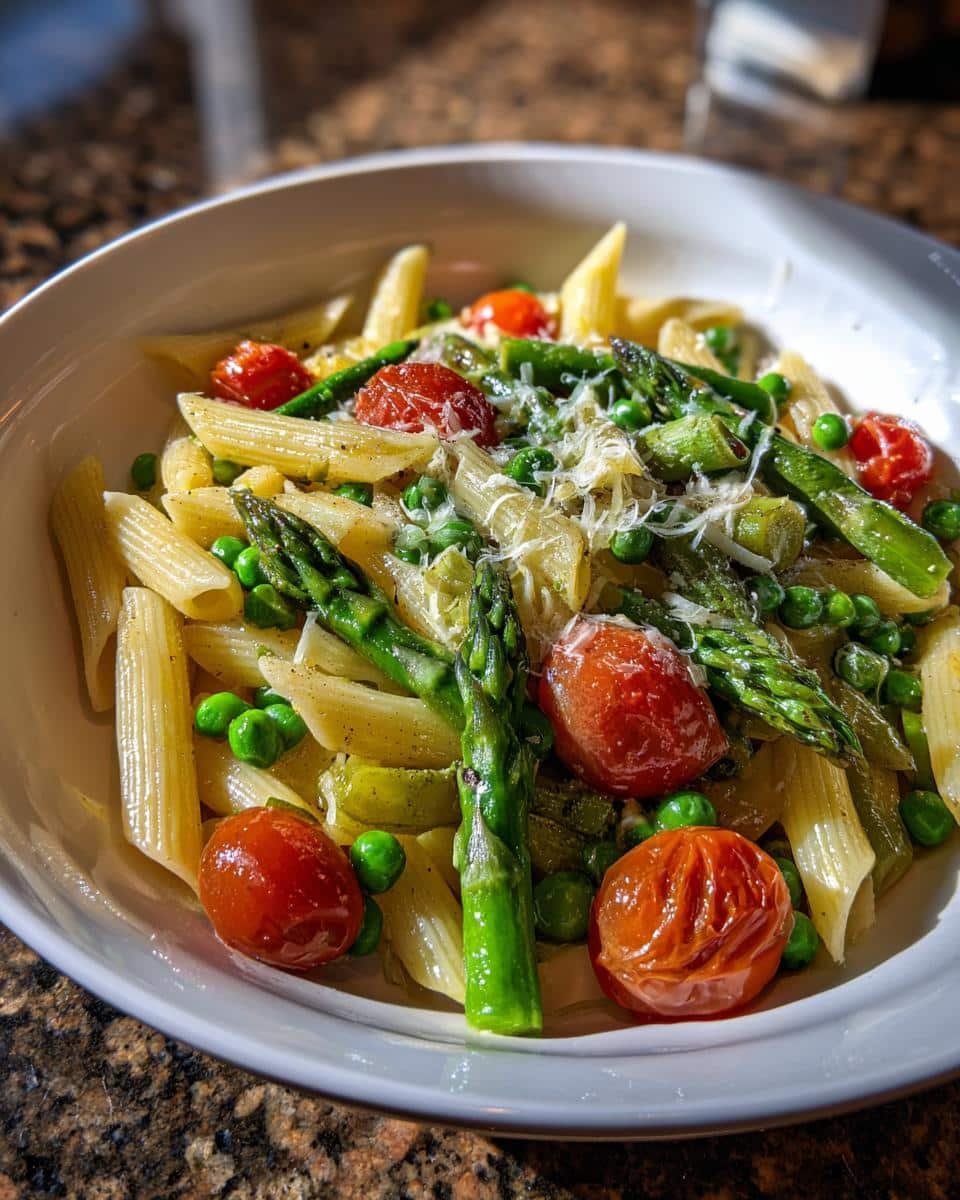
Why You’ll Love This Spring Vegetable Pasta
Let me tell you why this recipe never leaves my spring rotation:
- Ready in 25 minutes flat (I timed it!) – perfect for those busy weeknights when you want something fresh but don’t have hours to cook
- Tastes like sunshine with those sweet peas and crisp asparagus – way better than takeout
- Super adaptable – use whatever veggies are looking good at the farmers market that week
- Kids actually eat it (mine do!) – the bright colors make it fun
- Feels fancy but costs less than $10 to make – my kind of dinner party trick!
Ingredients for Spring Vegetable Pasta
Here’s what you’ll need to make this vibrant spring dish – I promise these simple ingredients come together to create something truly special. I always tell my cooking students: “Great food starts with great ingredients,” and that’s especially true here where each vegetable shines.
- 8 oz pasta (I use penne or fusilli – something with curves to catch all those tasty bits)
- 1 cup asparagus, chopped into 1-inch pieces (look for bright green, firm stalks)
- 1 cup peas (fresh if you can find them, but frozen works perfectly in a pinch)
- 1 cup cherry tomatoes, halved (the sweeter the better – give them a taste test before buying)
- 2 cloves garlic, minced (don’t skimp – this is your flavor foundation)
- 2 tbsp olive oil (the good stuff – you’ll taste the difference)
- 1/4 cup grated Parmesan (freshly grated melts better than the pre-shredded kind)
- Salt and pepper to taste (I use flaky sea salt for finishing)
A quick prep tip: I chop everything before starting to cook – it makes the process so smooth. That moment when you see all those colorful ingredients lined up on your cutting board? That’s when I know dinner’s going to be good!
How to Make Spring Vegetable Pasta
Okay, let’s get cooking! This comes together so fast you’ll want to have everything prepped and ready to go. Trust me, once you start cooking, it’s all hands on deck – but in the best way possible. Here’s exactly how I make it:
Cooking the Pasta
First things first – get that pasta going! I use a big pot of well-salted boiling water (it should taste like the sea) and cook the pasta according to the package directions, but I always check it 1 minute early. You want it al dente – with just a little bite – because it’ll cook a bit more when we mix everything together later.
Here’s my little trick: I reserve about 1/2 cup of the starchy pasta water before draining. That magical liquid helps the sauce cling to the noodles later. Drain the pasta but don’t rinse it – we want all that starch to help the flavors stick!
Sautéing the Vegetables
While the pasta cooks, heat your olive oil in a large skillet over medium heat. Add the garlic and let it sizzle for about 30 seconds – just until fragrant. Don’t let it brown! Burnt garlic is the worst.
Now toss in the asparagus and peas. I cook these for about 3-4 minutes, stirring occasionally. You want the asparagus to turn bright green and get slightly tender but still have some crunch. The peas should be warmed through but still pop when you bite into them.
Add the cherry tomatoes last – they only need about 2 minutes to soften slightly while keeping their shape. The tomatoes will release some juices that mix beautifully with the olive oil to create a light, fresh sauce.
Combining Everything
Now the magic happens! Add the drained pasta to the skillet with the vegetables. Give everything a good toss – I like to use tongs for this part to really coat each piece evenly.
If the mixture seems dry, drizzle in some of that reserved pasta water a tablespoon at a time until it reaches your perfect consistency. Sprinkle with Parmesan, then season with salt and pepper to taste. I always do a final taste test here – sometimes it needs an extra pinch of salt to really make the flavors sing.
And that’s it! Serve immediately while it’s piping hot. Watch how the colors pop on the plate – it’s like eating springtime itself!
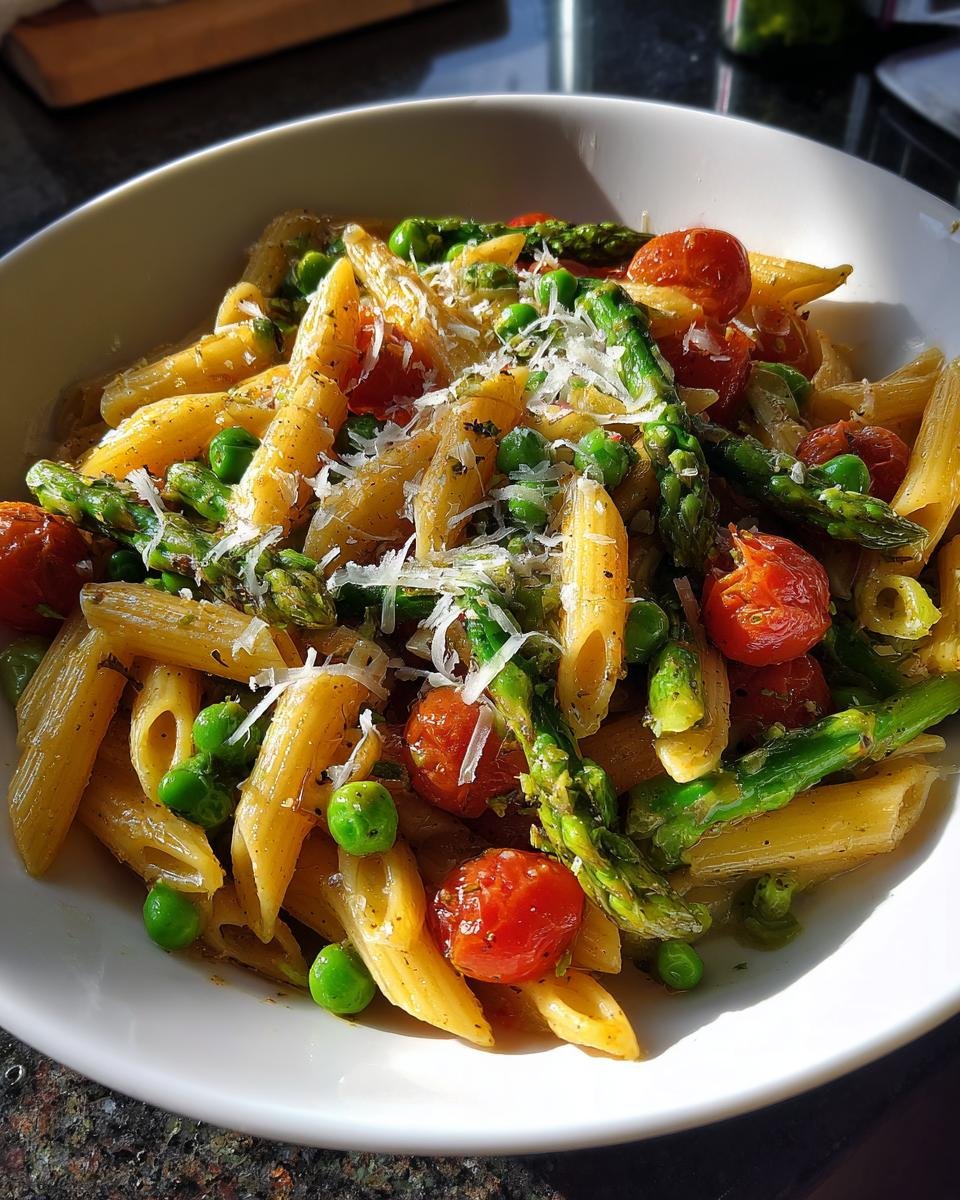
Tips for Perfect Spring Vegetable Pasta
After making this dish more times than I can count (and surviving a few kitchen disasters!), I’ve picked up some tricks that make all the difference. Here are my must-know tips for spring vegetable pasta perfection:
- Blanch your peas first if using fresh – Just 30 seconds in boiling water followed by an ice bath keeps that gorgeous green color and perfect pop
- Snap asparagus at its natural breaking point – Hold each stalk at both ends and bend – it’ll snap where the tough part ends
- Add lemon zest right at the end – The citrus brightens everything up (I use about 1 teaspoon, but taste as you go)
- Don’t overcrowd the pan – If your skillet looks packed, cook veggies in batches for better caramelization
One last tip from my many trial-and-error moments: prep everything before heating the pan. This cooks so fast that you won’t have time to chop once you start! Trust me – I’ve burned garlic while frantically slicing tomatoes more times than I’d like to admit.
Variations for Spring Vegetable Pasta
One of my favorite things about this recipe is how easily you can mix it up based on what’s in season or what’s sitting in your fridge. I’ve probably made a hundred versions of this dish over the years, and here are my favorite twists that always work:
- The Vegan Trick: Swap the Parmesan for nutritional yeast (about 2 tablespoons) – it gives that same savory umami kick. My vegan sister-in-law taught me this, and now I use it even when she’s not coming over!
- Protein Power: Toss in some cooked shrimp, chicken, or white beans during the final mix – perfect for when you need something heartier. My husband insists on adding grilled chicken most nights.
- Herb Magic: Stir in a handful of fresh basil, mint, or parsley right before serving. Each herb changes the personality of the dish completely – mint makes it extra spring-like.
- Veggie Swaps: No asparagus? No problem! Try zucchini ribbons, broccolini florets, or even thinly sliced fennel. My neighbor once brought me fresh morel mushrooms – oh my, that was a special version!
- Citrus Twist: Add the zest and juice of half a lemon right at the end – it wakes up all the flavors. My daughter calls this “the sunshine version.”
- Spicy Option: Throw in some red pepper flakes with the garlic if you like heat. My brother adds a whole teaspoon – but that’s too much fire for me!
A little confession: I’ve even made this with winter squash when spring veggies weren’t available. While it wasn’t quite the same, it was still delicious! That’s the beauty of pasta – it’s endlessly adaptable to whatever you’ve got on hand. For more great dinner ideas, check out our full collection of dinner recipes.
Serving Suggestions for Spring Vegetable Pasta
This pasta sings all on its own, but a few simple additions can turn it into a proper spring feast. Here’s how I love to serve it – these are my tried-and-true favorite combos:
- Crusty bread – Essential for mopping up every last bit of that garlicky olive oil! I grab a baguette from my local bakery and warm it slightly before serving.
- A crisp white wine – My husband and I joke that we can taste spring in a glass of Sauvignon Blanc with this dish. The citrus notes pair beautifully with the veggies.
- Simple arugula salad – Just toss baby arugula with lemon juice, olive oil, and a pinch of salt. The peppery greens balance the pasta’s sweetness perfectly.
- Chilled rosé – For outdoor dinners, nothing beats this pink pairing. It’s become our tradition for the first al fresco meal of the season!
When I’m feeling fancy, I’ll shave some extra Parmesan over the top right at the table – that dramatic flourish always gets oohs and aahs from guests. And don’t forget to put out some good olive oil and flaky salt for those who want an extra flavor boost! If you enjoy this style of fresh, quick cooking, you might also love our Thai Chicken Peanut Noodle Stir Fry.
Storing and Reheating Spring Vegetable Pasta
I’ll be honest – this pasta tastes best fresh, but life happens! If you’ve got leftovers (which is rare in my house), here’s how to keep them tasting great. First, let the pasta cool to room temperature – but not more than 2 hours to stay food-safe. I transfer it to an airtight container and pop it in the fridge, where it’ll keep for up to 3 days.
When reheating, you’ll want to be gentle. My favorite method is the stovetop – just splash a little water or broth in a skillet, add the pasta, and warm it over medium-low heat, stirring often. The liquid helps revive the sauce without drying it out. If you’re in a hurry, the microwave works too – cover with a damp paper towel and use 30-second bursts, stirring between each.
One important note: The veggies will soften a bit when reheated (especially the asparagus), but the flavors still shine. If the pasta seems dry, don’t be afraid to drizzle with a little fresh olive oil and a squeeze of lemon before serving – it’s my secret revival trick!
Pro tip: I never reheat the whole batch at once – just what we’ll eat immediately. Repeated reheating makes the pasta mushy, and nobody wants that! For more great ideas, feel free to check out our Pinterest page for visual inspiration.
Nutritional Information for Spring Vegetable Pasta
For all my fellow food-lovers who like to know what’s going into their bodies (I’m right there with you!), here’s the nutritional breakdown for this spring vegetable pasta. Remember – these numbers are estimates because actual values can vary based on your exact ingredients. I always say: “Cook first, calculate later!” But if you’re tracking, this will give you a good ballpark.
- Calories: 320 per serving (but who’s counting when it’s this delicious?)
- Carbohydrates: 50g (mostly from the wholesome pasta and veggies)
- Protein: 12g (thank you, Parmesan and peas!)
- Fat: 8g (the good kind from olive oil)
- Saturated Fat: 2g (just a touch from the cheese)
- Fiber: 6g (all those spring veggies working hard for you)
- Sugar: 5g (natural sweetness from the tomatoes and peas)
- Sodium: 150mg (easy on the salt shaker and you’re golden)
- Cholesterol: 5mg (barely a blip on the radar)
A little nutrition note from my kitchen to yours: This dish packs a powerhouse of vitamins from all those colorful vegetables. The asparagus brings folate and vitamin K, the peas add plant-based protein and fiber, and the tomatoes contribute lycopene. That’s what I call eating the rainbow!
Remember, these numbers are for one serving (about 1/4 of the recipe), but let’s be real – seconds often happen in my house! The good news? You’re loading up on veggies with every delicious bite. If you are looking for other healthy options, check out our Spicy Chickpea Quinoa Power Bowl.
FAQs About Spring Vegetable Pasta
Over the years, I’ve gotten so many great questions about this recipe from friends and readers. Here are answers to the ones that pop up most often – my kitchen-tested wisdom to help you make the perfect spring pasta every time!
Can I use frozen vegetables instead of fresh?
Absolutely! Frozen peas work beautifully – I actually keep a bag in my freezer year-round for pasta emergencies. Just toss them in frozen and let them thaw as they cook with the other veggies. For frozen asparagus or other vegetables, pat them dry first to prevent extra moisture in your dish.
How do I make this pasta vegan?
It’s super easy – just skip the Parmesan or use nutritional yeast instead (about 2 tablespoons). I sometimes add a handful of toasted pine nuts too – they give that same rich, savory quality that cheese usually provides. My vegan version has fooled many non-vegan friends!
What if I can’t find asparagus?
No worries! Spring is all about flexibility. Try zucchini ribbons, snap peas, or even green beans. Once I used radishes when that’s all I had at home – thinly sliced and sautéed, they added a lovely peppery crunch. The key is using whatever fresh vegetable makes your heart sing at the market that day.
Remember friends – cooking should be fun, not stressful. If you’ve got a question I didn’t cover, just think “What would taste good?” and trust your instincts. That’s how all the best kitchen discoveries happen! For more recipe inspiration, browse all our recipes.