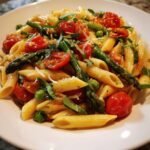


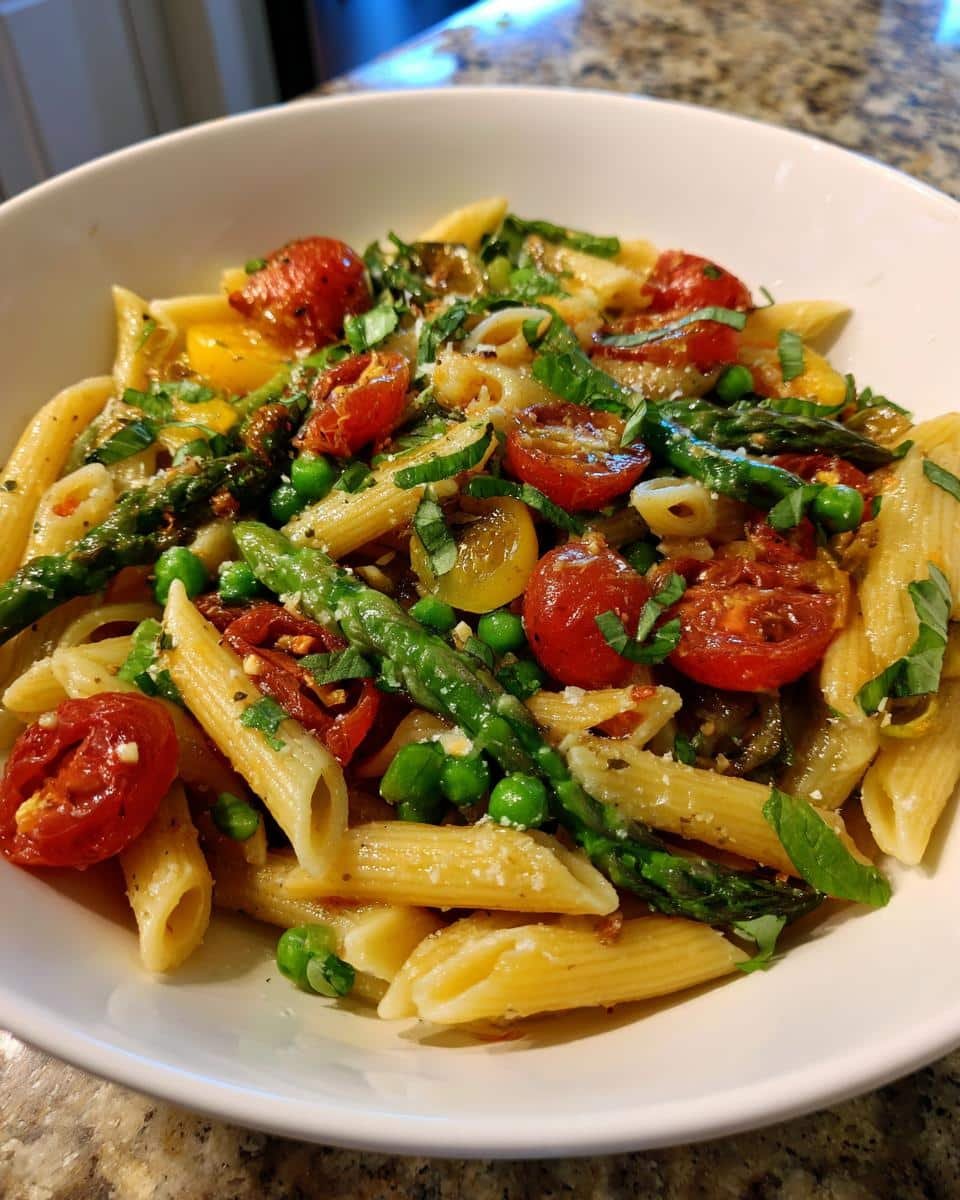
Oh my gosh, you have to try this Spring Garden Pasta—it’s like eating sunshine on a plate! When the first asparagus shoots pop up in my garden, this is the dish I crave. I swear, nothing captures that fresh spring energy better than tossing al dente pasta with bright green peas, juicy tomatoes, and crisp asparagus. It’s my go-to when I want something light but still satisfying after a long day digging in the dirt.
My neighbor Gina introduced me to this recipe years ago during one of our impromptu porch wine nights (bless her). Now it’s my favorite way to use up all those early garden goodies before summer’s heat sets in. The best part? It comes together faster than you can say “more Parmesan, please!”
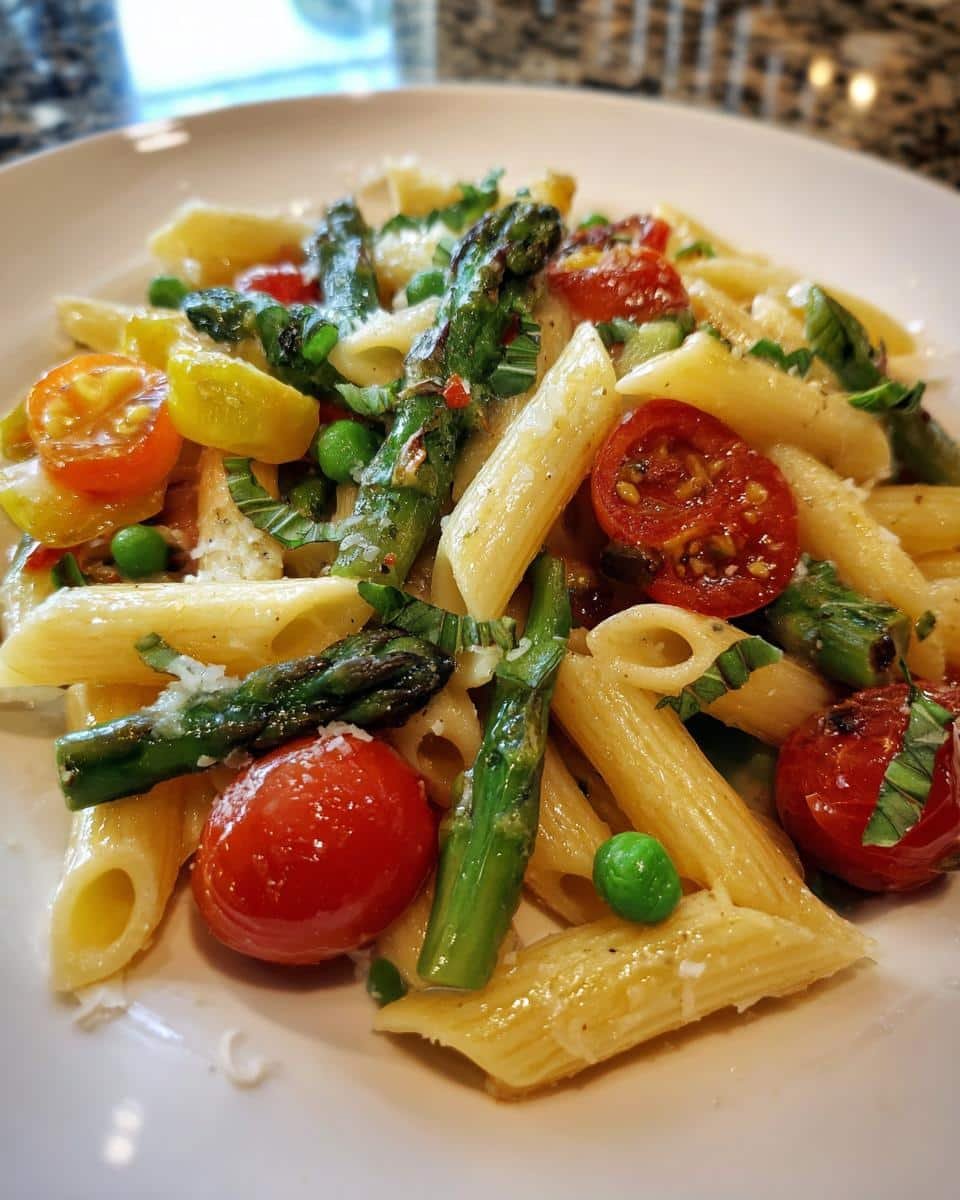
Why You’ll Love This Spring Garden Pasta
Trust me, this isn’t just another pasta dish—it’s springtime on a fork! Here’s why I make it constantly from April through June:
- Freshness you can taste: Every bite bursts with crisp asparagus, sweet peas, and juicy tomatoes straight from the garden (or farmer’s market)
- Ready in minutes: From chopping to table in under 25 minutes—perfect for those nights when you’re too busy admiring your tulips to cook
- Endlessly adaptable: Swap in whatever spring veggies look best that week (radishes? zucchini blossoms? Go wild!)
- Minimal cleanup: One pot for pasta, one pan for veggies—my kind of kitchen math
Ingredients List
Okay, let’s get real about ingredients – this is where the magic starts! I’ve learned through many (many) batches that precise measurements make all the difference in this spring garden pasta. Here’s exactly what you’ll need:
- 8 ounces pasta (I’m partial to penne – those little tubes hold the sauce perfectly, but fusilli works great too)
- 2 tablespoons olive oil (the good stuff – you’ll taste it!)
- 1 cup cherry tomatoes, halved (about 20-24 tomatoes – trust me, I’ve counted)
- 1 cup asparagus, chopped into 1-inch pieces (trim those woody ends first!)
- 1/2 cup peas (fresh if you’re fancy, frozen if you’re smart – no judgment here)
- 2 cloves garlic, minced (or 3 if you’re feeling bold)
- 1/4 cup grated Parmesan (please, please grate it fresh – the pre-shredded stuff just isn’t the same)
- 1/4 cup fresh basil, chopped (don’t even think about dried for this one)
- Salt and pepper to taste (I always use kosher salt – it’s my secret weapon)
See? Simple ingredients, but each one plays a crucial role. Now let’s make some magic happen!
Equipment List
You’ll need just a few trusty tools – I promise nothing fancy! Grab these before you start:
- 12-inch skillet (big enough to toss everything without making a mess)
- Large pot (for boiling that pasta to perfection)
- Colander (to drain without losing precious peas down the drain!)
- Wooden spoon (my go-to for gentle stirring)
- Chef’s knife (for speedy veggie chopping)
That’s it! Now let’s get cooking.
Step-by-Step Instructions
Alright, let’s dive into making this spring garden pasta! I promise it’s easier than keeping your basil plant alive (and we’ve all been there). Follow these steps carefully, especially the timing bits – that’s where the magic happens!
Preparing the Vegetables
First things first – let’s get those veggies ready! Here’s exactly how I prep them for maximum flavor and texture:
- Cherry tomatoes: Halve them carefully – you want pieces about the size of a blueberry (not too big, not too small). This ensures they soften just right in the pan without turning mushy.
- Asparagus: Snap off the woody ends first (they’ll naturally break where they should), then chop into 1-inch pieces. The diagonal cut looks pretty if you’re feeling fancy!
- Garlic: Mince it finely – we’re not making garlic bread here! You want it to melt into the oil, not overpower the dish.
Pro tip: Have everything prepped and ready before you start cooking – this dish moves fast once the heat’s on!
Cooking the Pasta
Now for the pasta – the heart of our dish! Here’s how to nail it every time:
- Bring a large pot of salted water to a rolling boil (it should taste like the sea – about 1 tablespoon per gallon).
- Add your pasta and stir immediately to prevent sticking. Set a timer for 1 minute less than the package says – we want it al dente!
- When the timer goes off, test a piece – it should still have a slight bite to it (we’ll finish cooking it with the veggies).
- Reserve 1/2 cup of that starchy pasta water before draining – trust me, this liquid gold makes all the difference!
Combining Everything
This is where the magic happens! Here’s how to bring it all together perfectly:
- Heat your olive oil in the skillet over medium heat. Add the garlic first and let it sizzle for just 30 seconds – you’ll smell when it’s ready!
- Toss in the veggies starting with asparagus (it needs 2 minutes head start), then peas and tomatoes. Stir gently but don’t overcook – we want that fresh crunch!
- Add the drained pasta and a splash of reserved pasta water. Use tongs to gently lift and fold everything together – you’re not stirring concrete here!
- Finish with Parmesan and basil, giving one final gentle toss. The cheese should melt into a light sauce that just clings to the pasta.
And voilà! You’ve just made spring in a bowl. Now grab that wine glass and dig in! You can find more inspiration for delicious meals like this one on my Pinterest page.
Variations for Your Spring Garden Pasta
One of my favorite things about this recipe? It’s basically a blank canvas for whatever spring treasures you’ve got! Here are my favorite twists:
- Protein boost: Toss in grilled chicken, shrimp, or even crispy pancetta if you’re feeling fancy
- Cheese swap: Try pecorino for extra tang or goat cheese for creaminess
- Herb garden: Mix in chives, mint, or parsley when basil’s not available
- Citrus zing: A squeeze of lemon right at the end brightens everything up
- Spice it up: Red pepper flakes make this dish sing on chilly spring nights
The rule? If it grows together, it goes together – have fun experimenting!
Serving Suggestions
Oh honey, presentation matters with this spring beauty! Here’s how I love to serve it:
- Warm bowls: Pre-heat your serving dishes for that cozy bistro feel
- Extra garnish: A sprinkle of microgreens or edible flowers makes it Instagram-worthy
- On the side: Crusty bread for sauce-mopping and a crisp white wine
- Family-style: Dump it all in a big colorful bowl – let everyone dig in!
Trust me, this dish tastes even better when it looks as joyful as spring itself! If you enjoy light, fresh meals, you might also love my grilled chicken Caesar salad wrap.
Storage & Reheating Instructions
Leftovers? No problem! Store cooled pasta in an airtight container for up to 3 days. When reheating, splash in a tablespoon of water or broth before microwaving – it’ll revive that perfect saucy texture. Pro tip: Add fresh basil after reheating for that just-made taste!
Nutritional Information
Okay, let’s talk numbers – but remember, this is home cooking, not lab science! Here’s the scoop on what you’re getting in each serving (based on my exact ingredient list):
- Calories: 320 (perfect for that “I gardened all day” hunger)
- Protein: 12g (thanks to that Parmesan and whole wheat pasta if you used it)
- Carbs: 45g (hello, energy for more spring planting!)
- Fiber: 6g (all those gorgeous veggies doing their thing)
- Sugar: 5g (just the natural sweetness from tomatoes and peas)
Important note: These numbers can change based on your exact ingredients and portions. If you’re watching specific nutrients closely, definitely consult a nutritionist. But honestly? When something tastes this fresh and makes you feel this good, I say enjoy every bite! For other healthy options, check out my spicy chickpea quinoa power bowl.
FAQ Section
Q1. Can I use regular tomatoes instead of cherry tomatoes?
Absolutely! Just chop them smaller – about cherry tomato size. The key is keeping pieces uniform so they cook evenly.
Q2. What if I don’t have fresh peas?
Frozen peas work perfectly! No need to thaw – toss them in frozen and they’ll heat through with the other veggies.
Q3. Can I make this gluten-free?
Of course! Swap in your favorite GF pasta. Just watch the cooking time – gluten-free noodles can get mushy fast.
Q4. How do I know when the asparagus is done?
It should turn bright green and feel tender-crisp when poked with a fork – about 4 minutes usually does it.
Q5. Can I prep the veggies ahead?
You bet! Chop everything up to 24 hours in advance. Just store them separately in airtight containers in the fridge.