

You know those nights when you’re staring into the fridge, willing something delicious to appear? That’s how my love affair with this Asparagus Pea Pasta began. I’d just gotten home from work—tired, hungry, and not in the mood for anything complicated. Then I spotted a bunch of asparagus staring back at me like it had a secret. Five minutes later, I was tossing garlic into hot olive oil, and suddenly, my kitchen smelled like spring. This dish became my go-to for those “I can’t even” evenings—quick, fresh, and packed with green goodness. The peas add sweetness, the asparagus gives crunch, and that Parmesan? Well, let’s just say it makes everything better. What I love most is how adaptable it is—perfect for meatless Mondays or just clearing out your veg drawer. Trust me, once you try this, you’ll understand why it’s become my signature weeknight savior.
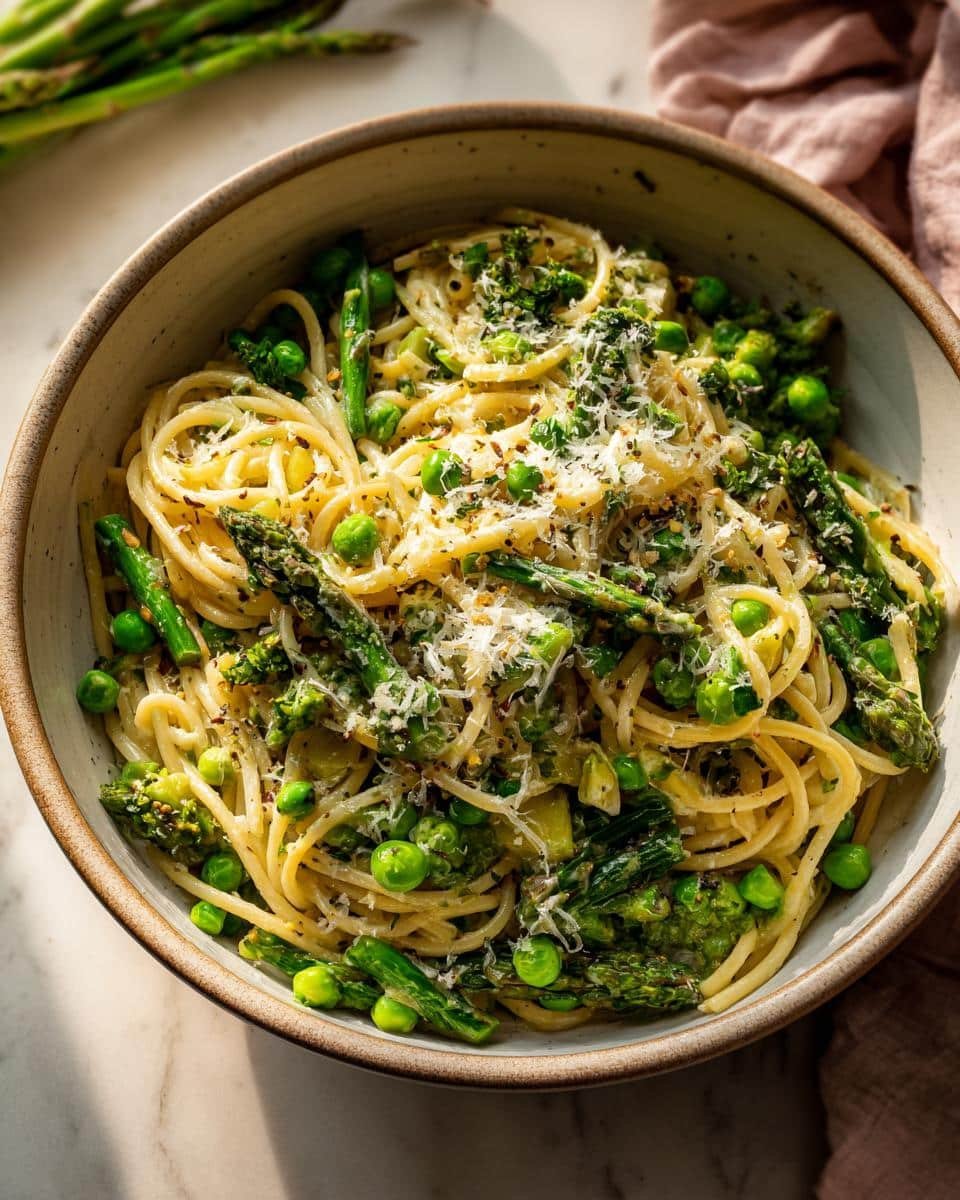
Why You’ll Love This Asparagus Pea Pasta
This isn’t just another pasta dish—it’s your new weeknight hero. Here’s why:
- Speedy satisfaction: From fridge to fork in under 30 minutes (yes, even after a long day)
- Spring in every bite: Crisp asparagus and sweet peas make it taste fresh and vibrant
- Healthy-ish comfort food: Packed with veggies but still feels indulgent with that Parmesan blanket
- Endlessly adaptable: Swap in whatever greens you have—it’s forgiving like that
Seriously, this dish checks all the boxes. The first time I made it, I knew I’d found something special—and you will too. If you are looking for more quick dinner ideas, check out our full collection of dinner recipes.
Ingredients for Asparagus Pea Pasta
Gather these simple ingredients—each one plays a special role in creating magic:
- 200g pasta (I like linguine, but any shape works)
- 150g asparagus, tough ends snapped off and cut into 2-inch pieces
- 100g peas (fresh or frozen—see notes below)
- 2 cloves garlic, minced fine (trust me, you’ll want every bit of flavor)
- 2 tbsp olive oil (the good stuff—this is your flavor base)
- Salt and pepper to taste
- 50g grated Parmesan, packed (plus extra for serving)
Ingredient Notes & Substitutions
Don’t stress if you’re missing something—this recipe bends without breaking:
- Peas: Frozen work great! Just toss them in frozen—they’ll thaw while cooking
- Parmesan: Vegan? Nutritional yeast adds a similar umami punch
- Asparagus: Too thick? Halve them lengthwise for even cooking
- Oil: Out of olive oil? Butter makes a delicious (if less healthy) substitute
See? Cooking should be fun, not fussy. Use what you’ve got! You can find more tips on ingredient swaps on our Pinterest board.
Equipment You’ll Need
No fancy gadgets required—just these kitchen basics:
- Large pot for boiling pasta (the bigger, the better—less sticking!)
- Skillet or wide pan (so your veggies have room to shine)
- Colander (but save some pasta water—trust me on this)
- Wooden spoon (my favorite for stirring without scratching pans)
That’s it! Now let’s get cooking.
How to Make Asparagus Pea Pasta
Okay, let’s make magic happen—this comes together faster than you can say “dinner’s ready!” Here’s how I do it:
- Boil your pasta: Get that water salty like the sea (it’s your only chance to season the pasta itself). Cook until al dente—usually about 1 minute less than the package says. Drain, but save a cup of that starchy water—it’s liquid gold for your sauce!
- Sizzle the garlic: While pasta cooks, heat olive oil in your skillet over medium. Add minced garlic and stir for just 30 seconds until fragrant—don’t let it brown! That bitter taste ruins everything.
- Cook the veggies: Toss in asparagus pieces and peas. Stir-fry for about 4-5 minutes until asparagus is tender-crisp (bite a piece to test—it should snap, not mush).
- Bring it all together: Add drained pasta to the skillet with a splash of reserved pasta water. Toss like you mean it! The starch helps create a silky sauce. Finish with Parmesan, salt, and pepper to taste.
Pro Tips for Perfect Asparagus Pea Pasta
My hard-earned secrets for restaurant-quality results every time:
- Watch the asparagus: Overcooked = sad limp spears. Pull it off heat when still bright green.
- Pasta water is key: That cloudy liquid thickens the sauce naturally—no cream needed!
- Taste as you go: Season in layers—a pinch when cooking veggies, another after adding cheese.
Now dig in before it gets cold!
Serving Suggestions for Asparagus Pea Pasta
This dish shines bright on its own, but here’s how I love to serve it:
- Crusty bread: For soaking up every last bit of that garlicky goodness
- Simple salad: A lemony arugula mix cuts through the richness perfectly
- Garnish galore: Extra Parmesan (duh!), red pepper flakes for heat, or fresh lemon zest for zing
My favorite? A chilled glass of Pinot Grigio—pure springtime happiness! If you enjoy light pasta dishes, you might also like our Spaghetti Aglio e Olio with Shrimp.
Storage and Reheating
Leftovers? Lucky you! This asparagus pea pasta keeps beautifully in an airtight container for up to 3 days. When reheating, add a splash of water—it brings back that silky texture like magic. I sometimes microwave it in 30-second bursts, stirring between each, to avoid hot spots. Pro tip: The flavors actually deepen overnight, making next-day lunches something to look forward to!
Nutritional Information
Here’s the scoop on what’s in each satisfying serving (estimates vary based on ingredients used):
- Calories: About 450 per generous plateful
- Fat: 15g (mostly the good kind from olive oil)
- Protein: 18g (thank you, Parmesan and peas!)
- Carbs: 60g (with 8g fiber to keep you full)
Not bad for something that tastes this indulgent, right? The veggies pack vitamins while the pasta gives you energy—a win-win in my book! For more healthy options, browse our recipes section.
Frequently Asked Questions
Can I use frozen asparagus?
Absolutely! Just thaw and pat dry first—frozen asparagus releases more water, so you might need to cook it a minute longer. I actually keep a bag in the freezer for emergency pasta nights!
How do I make this vegan?
Easy peasy! Skip the Parmesan and use nutritional yeast instead—about 2 tablespoons should do it. For extra richness, stir in a spoonful of vegan butter at the end. The peas and asparagus still give you plenty of flavor!
What pasta shapes work best?
I’m partial to long noodles like linguine, but any shape grabs the sauce beautifully. Smaller pastas like penne trap peas in their tubes—fun surprise bites! Just avoid super delicate shapes that might get overwhelmed by the chunky veggies.
Can I add protein?
Of course! This is your kitchen. I’ve tossed in white beans, chickpeas, or even crispy tofu cubes. If you’re not vegetarian, grilled shrimp or pancetta bits are delicious additions. Just cook any extras separately before mixing in.
Try this recipe and share your results! Tag me with your creations—I love seeing your twists on my favorite quick dinner.