A pizza stone is one of the most effective tools for making restaurant-quality pizza and artisan bread at home. It simulates the effect of a professional deck oven — producing a crisp, evenly cooked crust that a standard baking sheet cannot match.
How a Pizza Stone Works
A pizza stone is a flat, porous slab made from ceramic, cordierite, or cast iron that absorbs and retains heat at high temperatures. When preheated in the oven, it stores enough thermal energy to immediately begin crisping the pizza base as soon as the dough makes contact. The porous surface also draws moisture away from the dough — a key factor in achieving a crisp rather than soggy bottom crust.
Materials
Cordierite
Cordierite is a natural mineral known for exceptional thermal shock resistance — it can go from room temperature into a 500°C oven without cracking, and it preheats quickly. Most premium pizza stones use cordierite. It is slightly porous, handles high heat well, and is durable for long-term daily use.
Ceramic
Ceramic pizza stones are widely available and less expensive than cordierite. They work well but are more susceptible to thermal shock — cracking if cold dough is placed on a very hot stone or if the stone is removed from a hot oven and placed on a cold surface. Always bring ceramic stones to temperature gradually.
Cast Iron
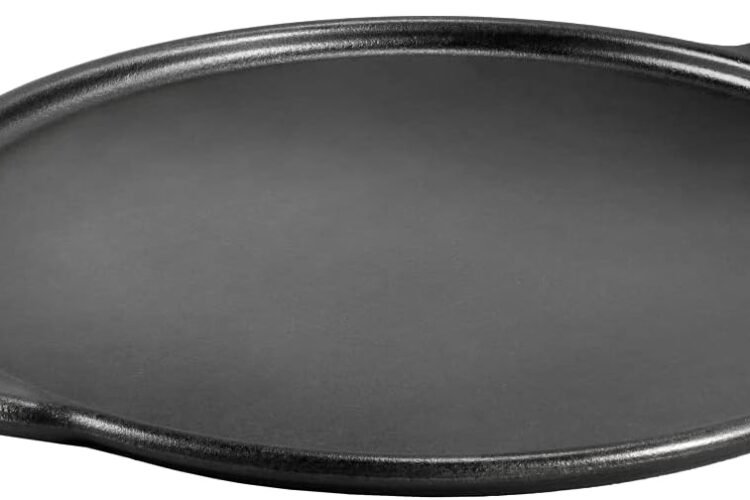
Cast iron pizza pans or griddles function similarly to stones. They heat very evenly, retain heat exceptionally well, and are essentially indestructible. They are heavier than ceramic or cordierite and are compatible with stovetop use as well as oven. A Lodge cast iron pizza pan is a popular and durable choice.
Steel
Baking steel (typically 1/4-inch thick mild steel) conducts heat faster than ceramic or stone and produces even crisper crusts in shorter cooking times. It is heavier and more expensive but outlasts any ceramic stone and produces superior results for Neapolitan-style pizza.
Size and Thickness
Common sizes range from 12 to 16 inches in diameter or length. A 14-inch round or 14×16-inch rectangular stone covers most home pizza sizes. Thickness affects heat retention — a thicker stone retains more heat but takes longer to preheat. Most stones are 0.5 to 0.75 inches thick.
Preheating
Proper preheating is critical. A pizza stone should be placed in a cold oven and then heated to maximum temperature (typically 260-290°C / 500-550°F). Most stones need at least 45 minutes to fully absorb heat. A stone that is not properly preheated will not produce a crisp bottom crust.
Using a Pizza Peel
Launching pizza onto a hot stone requires a pizza peel — a flat wooden or metal paddle. The pizza is assembled on the peel (dusted with semolina or flour to prevent sticking) and slid onto the stone with a quick forward-and-back motion. A wooden peel is better for assembling and launching; a perforated metal peel is better for retrieving the finished pizza.
Cleaning and Maintenance
Never wash a pizza stone with soap — the porous surface absorbs it. Clean with a dry brush or scraper after the stone has cooled completely. Staining from olive oil and toppings is normal and does not affect performance. Some discoloration is expected with use.
What to Look For
For most home cooks, a 14-inch cordierite stone or cast iron pizza pan in the 1/2-inch thickness range is the best starting point. If you are serious about pizza and bake frequently, a baking steel is worth the investment — it performs better and lasts indefinitely.
Summary
A pizza stone transforms home oven pizza by replicating the effect of a professional deck oven. Material, thickness, and proper preheating are the critical factors. A quality stone is a durable, one-time investment that significantly improves crust quality.
You can check more details and current options on Amazon here.