

There’s nothing quite like that first sip of hibiscus tea – tart, vibrant, and instantly refreshing. I fell in love with this ruby-red brew during a sweltering summer trip to Mexico, where street vendors serve it ice-cold with a sprinkle of lime. But here’s the best part: hibiscus tea isn’t just delicious; it’s packed with antioxidants and vitamin C, and cultures worldwide have cherished it for centuries. Whether you need a caffeine-free pick-me-up or a stunning party drink that looks as good as it tastes, this simple floral tea delivers. And trust me, once you try brewing it at home, you’ll never go back to store-bought versions!
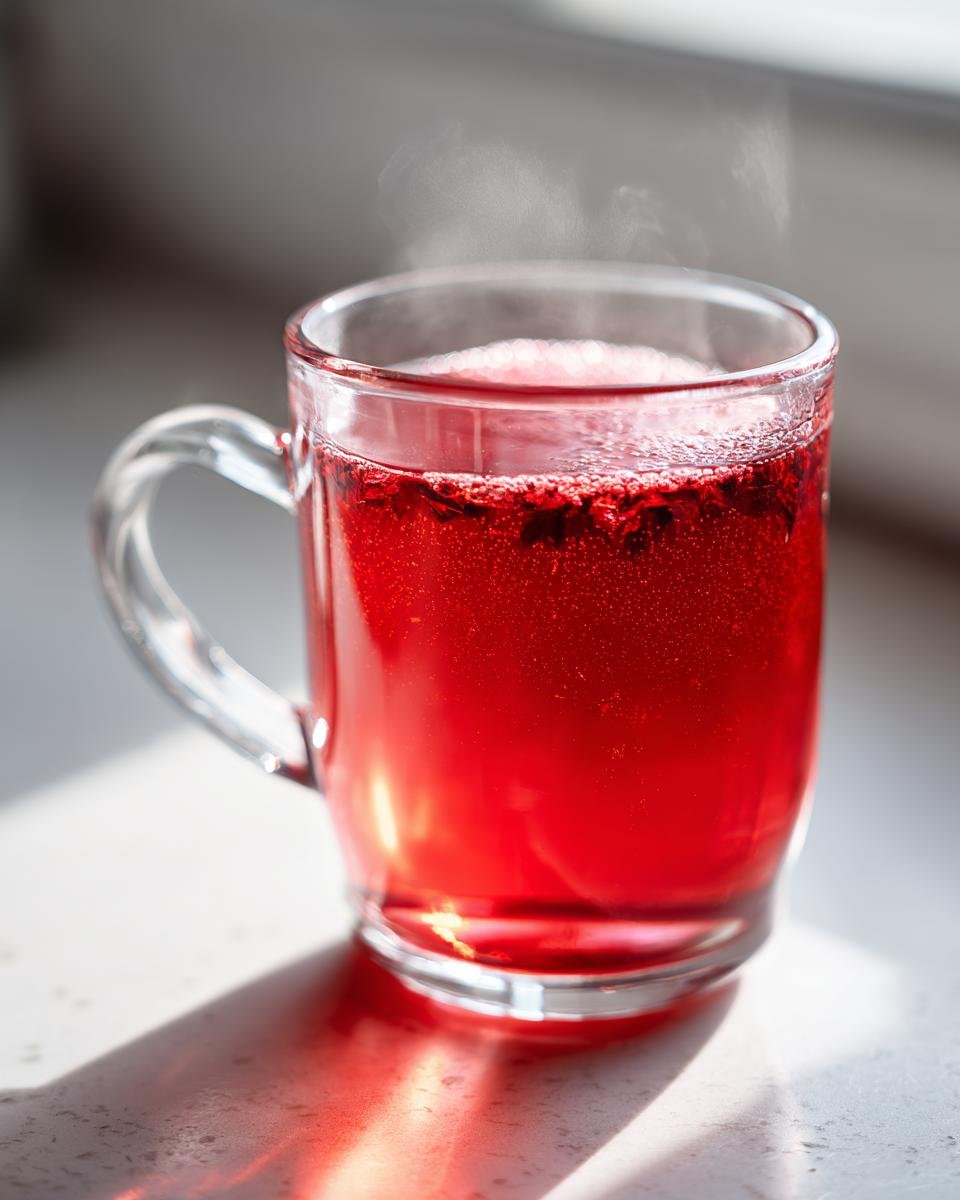
Why You’ll Love This Hibiscus Tea Recipe
This hibiscus tea recipe has been my go-to for years, and I’ll tell you exactly why it beats any store-bought version. First, it’s ridiculously easy – just boil, steep, and strain. No fancy equipment needed! The flavor? A perfect balance of tart and sweet that wakes up your taste buds. Plus, it’s naturally caffeine-free and packed with vitamin C. My favorite part? You can serve it piping hot on chilly mornings or ice-cold for summer picnics. It’s like getting two drinks in one!
Hibiscus Tea Ingredients
You won’t believe how few ingredients you need for this gorgeous tea! Here’s what I always have ready:
- 4 cups water (filtered makes a difference!)
- 1/2 cup dried hibiscus flowers (look for deep red ones – they pack the most flavor)
- 2 tablespoons honey or sugar (optional, but I love a touch of sweetness)
- 1 cinnamon stick (my secret weapon for depth)
- 1 teaspoon fresh ginger, grated (peel it first – trust me on this)
That’s it! The magic happens when these simple ingredients come together. Pro tip: if your hibiscus flowers smell musty, they’re past their prime – fresh barrels should have a bright, almost cranberry-like aroma.
How to Make Hibiscus Tea
Making hibiscus tea is so simple it’ll become your new kitchen ritual. I’ve brewed gallons of this stuff over the years, and I’ve learned a few tricks to get that perfect balance of tart and refreshing every time. Just follow these steps and you’ll be sipping happiness in no time!
Step 1: Boil the Water
First things first – grab your favorite pot and measure out 4 cups of water. Filtered water really does make a difference here, since tap water can sometimes add funky flavors. Bring it to a rolling boil over medium-high heat – you want those big, enthusiastic bubbles! This takes about 5 minutes on my stove, but keep an eye on it.
Step 2: Steep the Hibiscus Flowers
Once boiling, remove from heat immediately and add your hibiscus flowers. Here’s where the magic happens! Toss in that cinnamon stick and grated ginger too if you’re using them. Now, here’s my secret – don’t just dump everything in. Gently swirl the flowers in with a wooden spoon so they all get evenly exposed to the hot water. Let it steep uncovered for 10 minutes – any longer and it gets too tart, any shorter and you’ll miss out on that gorgeous ruby color.
Step 3: Strain and Serve
Time to strain! I use a fine mesh strainer lined with cheesecloth to catch every last flower bit. Taste it now – if you want it sweeter, stir in your honey or sugar while it’s still warm. Here’s the fun part: drink it hot with a slice of orange for cozy vibes, or pour it over ice with fresh mint for a cooling treat. Either way, that vibrant flavor will make your taste buds sing!
Tips for the Best Hibiscus Tea
After making countless batches of hibiscus tea, I’ve picked up some game-changing tricks! First – sweetness timing matters. Always add honey or sugar after steeping when the tea’s still warm, not during boiling. Second, for iced versions, brew it extra strong since ice dilutes the flavor. Third, store leftovers in glass jars (not plastic!) to keep that vibrant taste fresh for up to 3 days. My favorite pro tip? Freeze some in ice cube trays – they make the prettiest drink garnishes!
Hibiscus Tea Variations
One of my favorite things about hibiscus tea is how easily you can change it up! Here are the variations I make most often:
- Spiced Hibiscus: Add star anise or cloves while steeping for a warming winter version
- Tropical Iced: Mix with chilled coconut water and pineapple chunks – instant vacation vibes!
- Citrus Zing: Squeeze in lime or orange juice right before serving (the acid makes the color pop!)
- Sparkling Hibiscus: Top chilled tea with soda water for fancy fizzy sips
- Berry Boost: Muddle fresh raspberries or blackberries in the bottom of your glass
Honestly, I’ve never met a hibiscus tea variation I didn’t like. The flowers’ tartness plays so nicely with almost any fruit or spice – have fun experimenting!
Serving Suggestions
Oh, the fun you can have serving this tea! I love pairing hot hibiscus tea with cinnamon toast or almond biscotti – the sweetness balances that lovely tartness perfectly. For chilled versions, nothing beats serving it alongside fresh mango slices or spicy Mexican street corn (elote). And here’s my favorite breakfast combo: a frosty glass of hibiscus tea with warm pan dulce. Trust me, your morning routine will never be the same!
Hibiscus Tea Storage & Reheating
Here’s how I keep my hibiscus tea tasting fresh after brewing! Pour cooled leftovers into a glass jar (never plastic – it absorbs flavors) and refrigerate for up to 3 days. Want to reheat? Gently warm on the stove instead of microwaving – that keeps the delicate flavors intact. Pro tip: ice cube trays make perfect hibiscus tea “pops” for chilling future batches!
Hibiscus Tea FAQs
Can I use fresh hibiscus flowers instead of dried?
Absolutely! You’ll need about double the amount (1 cup fresh instead of 1/2 cup dried). Look for unsprayed, food-grade hibiscus flowers – the same type used for making jam. Just rinse them well first to remove any dirt. The fresh version gives a slightly brighter, more floral taste.
Why does my hibiscus tea taste bitter?
Two common culprits: steeping too long (stick to 10 minutes max!) or boiling the flowers instead of steeping them off heat. Also check your flowers’ quality – stale hibiscus can taste harsh. A pinch of baking soda while brewing neutralizes excess tartness.
Is hibiscus tea safe during pregnancy?
Most sources say occasional cups are fine, but hibiscus may affect estrogen levels. I’d check with your doctor first. When I was pregnant, I limited myself to one weak cup per week and skipped the ginger.
Can I cold brew hibiscus tea?
My favorite summer method! Combine flowers and cold water in a jar (same 1:8 ratio), refrigerate overnight, then strain. Cold brewing gives smoother flavor with less tartness. Try it with mint leaves – so refreshing!
Nutritional Information
Here’s the best part about hibiscus tea – it’s practically guilt-free! One cup of this ruby-red goodness contains just about 15 calories naturally, with only 3g of sugar if you add honey. It’s completely fat-free and packed with vitamin C – nature’s little wellness boost! Of course, nutrition varies by ingredients (that cinnamon stick adds trace minerals!), but even flavored versions stay light. Now go brew some and tell me how much you love it!